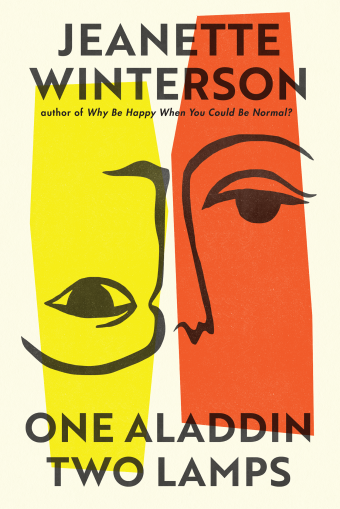
Oscii@bookrastinating.com a publié une critique de One Aladdin Two Lamps par Jeanette Winterson
Hmmm. Not quite sure what happened there. What WAS that?
2 étoiles
The thing with Winterson, is she's very, very good at writing high brow, quality literature. She really is. But also, she's always angry, and a bit of a snob.
I've read Oranges, so I totally understand how her view of Accrington (where I grew up, fifteen years after she did) is coloured by the alarming, abusive and theologically bankrupt life she had there, as the lesbian child of VERY conservative evangelical Christians. I get it. It was a mess, it turned her into a mess, and escape from all of it, the town, the class, the religion, the level of intellectual stimulation - it was utterly imperative to her survival. Wash the dust off your feet time.
But it's not Accrington's fault. It's a place of poverty, of limited opportunity, and conservative and restricted assumptions - in 1989, I was segregated from the boys in my class so …
The thing with Winterson, is she's very, very good at writing high brow, quality literature. She really is. But also, she's always angry, and a bit of a snob.
I've read Oranges, so I totally understand how her view of Accrington (where I grew up, fifteen years after she did) is coloured by the alarming, abusive and theologically bankrupt life she had there, as the lesbian child of VERY conservative evangelical Christians. I get it. It was a mess, it turned her into a mess, and escape from all of it, the town, the class, the religion, the level of intellectual stimulation - it was utterly imperative to her survival. Wash the dust off your feet time.
But it's not Accrington's fault. It's a place of poverty, of limited opportunity, and conservative and restricted assumptions - in 1989, I was segregated from the boys in my class so they could do woodwork while we learned to sew a pair of shorts (badly). NINETEEN EIGHTY NINE. But at least we still had a Marks and Spencer, and so did Winterson, actually, so the Accrington she remembers was less on its uppers than it is now.
One Aladdin Two Lamps isn't really fiction, and I'm regretting categorising it as such, when I added it to Bookrastinating. Not that I know what it is instead. She refers back to her mother and her youth in Accrington, but not frequently enough for it to be memoir. She uses the story of the Arabian Nights as a coat hanger to hang the rest of it from, and there is some retelling of the tales, and of the storyteller, so it's certainly PARTLY fiction. I feel like, if it was really nonfiction, it would have an index, or references, and it doesn't.
Really, it's a polemic about the state of the world, and AI, and why we need Universal Basic Income, and how trans people need to be allowed to get on with things. She cites the Arabian Nights as if they are bible passages that support her argument, and, oh, my God, I've just realised that's why I'm so confused - it's a SERMON. Which makes sense. In Oranges, she was a street preacher by the age of 14. Sermons are deeply engrained in her, as a way of putting your argument across unanswerably.
I don't fundamentally object to any of her points, though (as with the vast majority of sermons, now I come to think of it) I didn't find any of them life-changingly fundamental. Yes, women have been controlled and overlooked since the beginning of time. Yes, capitalism is a bit of a crock.
I do, however, object to her moral and intellectual superiority. Her snobbery about narrative fiction that doesn't come in book form - she's only grudgingly accepting of the audiobook medium (though I bet she sells them anyway). Her snobbery about what she clearly considers to be low brow, insufficiently literary fiction. She made me feel inferior for enjoying Richard Osman, two books ago.
I'm afraid I disagree. All culture is culture, all narrative fiction breeds empathy and understanding, and sometimes a book can find more ways to speak to you of the big questions of life, if you didn't need a dictionary next to you to read it.
She's right that books are magical, and open up worlds which would be otherwise lost to you. But where the heights and depths of that magic fall is intensely individual, and for me, the insatiable anger and dismissive snobbery make this book a low point.